
dezeen
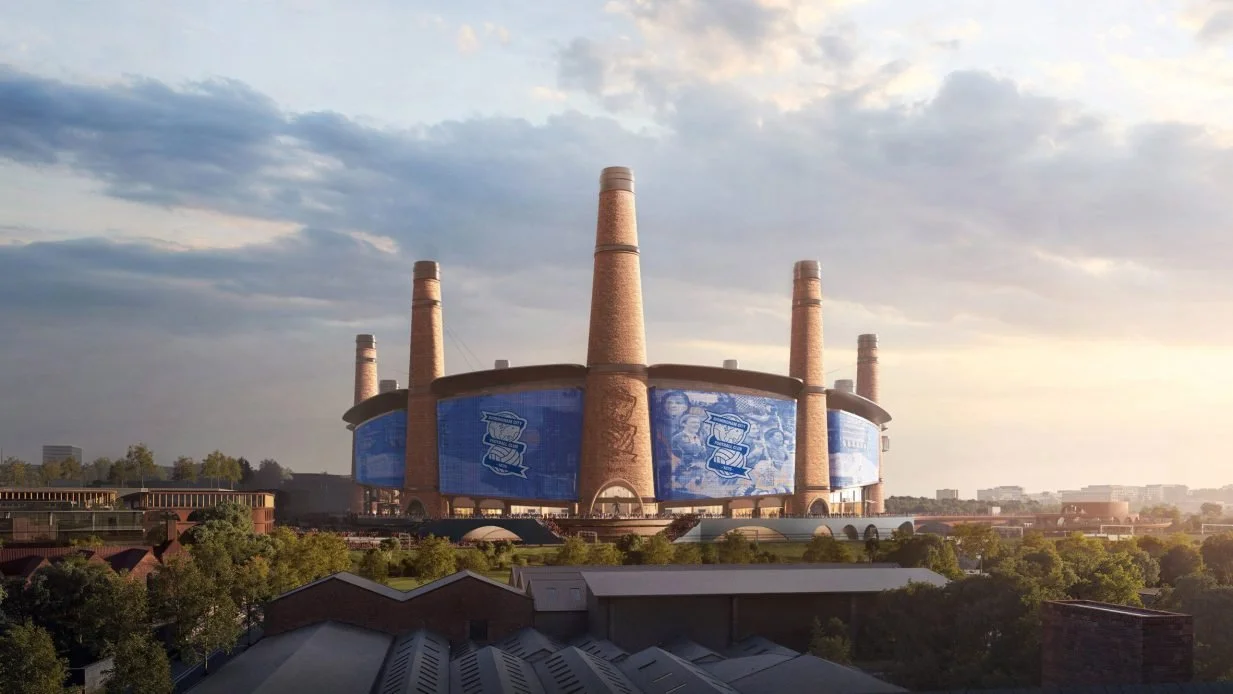
Stadiums are getting bolder. As teams evolve into global lifestyle brands, landmark projects like the revamped Santiago Bernabéu and the chimney-ringed design for Birmingham City signal a shift. Clubs no longer rely on matchday victories alone. They use memorable architecture to anchor placemaking, honor local identity, and extend their commercial reach.
It’s a deliberate break from the uniform stadium bowls of the 1980s and 1990s. A physical space should tell a story, and some clubs feel this strongly enough to resist corporate naming rights to protect their venue’s character.
We bring that lens to every branded environment we design. Before we touch an individual element, we lead visioning sessions and build conceptual boards that establish one design language for the entire footprint. We deliberately present a wide range of directions, some grounded and measured, others daring and unconventional. Clients won’t choose the boldest option every time, and they shouldn’t have to. But putting it on the table is how we find out what makes a brand truly its own.
Birmingham City’s twelve brick chimneys, inspired by the city’s former brickworks, drew plenty of surprise, not just because it’s the winning studio’s first stadium. Pairing that kind of unconventional idea with specialist stadium architects is what makes it buildable. The same goes for our work: a bold concept earns its place when it’s backed by rigorous execution.
That’s the balance we aim for with every client: the willingness to propose the unexpected, and the discipline to make it real.